

At first glance, Viggo Wallensköld (b. 1969) and Victor Barsokevitsch (1863–1933) seem to have nothing in common. But upon closer inspection, one comes to a different conclusion. A strange, surprising similarity emerges. One that transcends the centuries.
An Encounter That Transcends Time
Viggo paints. Victor photographed. They lived in different worlds, at differing paces, and in different centuries. Despite all this, they share a common language: Both place the viewer in a space where imagination is encouraged.
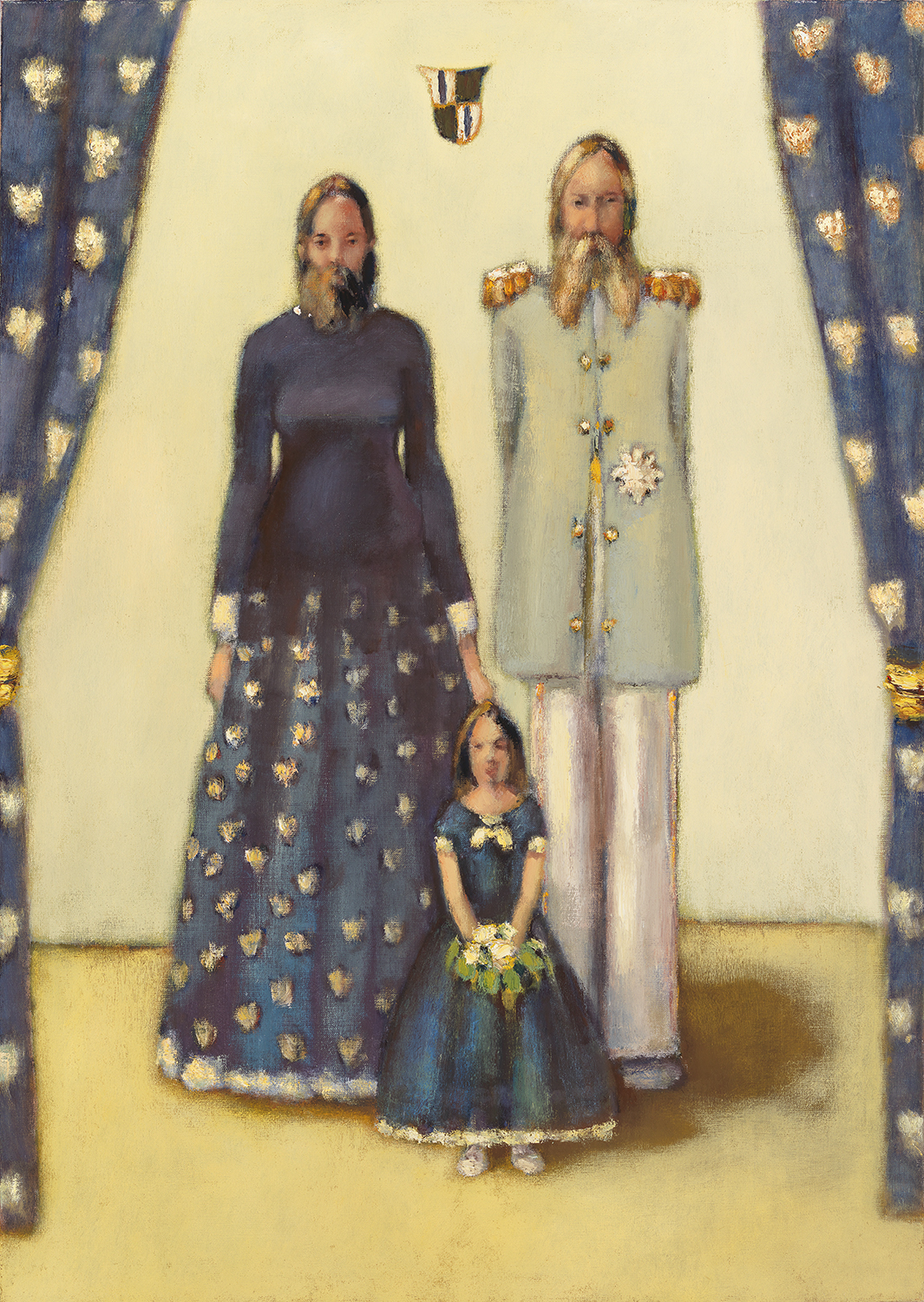
Viggo’s compositions possess the same airiness and stillness that Victor captured with his camera. A sense of peace is present in both of their images, yet there is something subtly off-kilter in the atmosphere — something a little strange and something almost cinematic. This is why Viggo and Victor have been brought together. Not to be compared, but to be seen parallel to each other.
Stories that take shape in the viewer’s mind
Victor Barsokevitsch’s photographs are filled with people about whom we know almost nothing. Yet the people in the images feel very close to the viewer. Looking at them, one begins to wonder about the relationships between the people in the photos, their professions, and the stories behind their gazes. Why did they come to the studio? What happened between them? Where did they go after this moment?
Victor’s studio captured the full spectrum of Savonian life. He knew how to engage with people through the camera so that their presence remains palpable to this day.
Viggo Wallensköld does something similar, but through the medium of painting. His works are based on old photographs, which often come from his family’s photo albums. Viggo’s works evoke a sense of melancholy and mystery and hold the promise that a story is just beginning.
For Viggo, old photographs are documents of a life lived. The photograph becomes the starting point for a new world: at once open and veiled, familiar and foreign. Viggo paints stories that everyone can write for themselves. The same applies to Victor’s photographs.
This exhibition is a sales exhibition. Some of the works by Viggo Wallensköld are available for purchase. For more information, please contact the museum staff, who will be happy to assist with details about the works and sales practices.
Accessibility information
In the exhibition spaces, there are colourfully painted wall surfaces and one separate dark video room. Visitors have the option to leave the spaces and return at their own pace. The museum staff are happy to assist if you need more information about the exhibition content or support during your visit.
The exhibition has received an exhibition fee grant from the Finnish Heritage Agency.